
Pixelongate — VR Game Design Workshops
What we teach.
Hands-on workshops focused on the mechanics, logic, and spatial thinking that go into building VR games — taught through projects you actually finish.
Online access means you work at the pace your schedule allows, without commuting or rescheduling around studio hours.
Workshop catalogue
Six structured programmes — each built around a specific phase of VR game production, from concept to playable prototype.
Spatial Interaction Design
Covers how players physically relate to virtual objects — reach, grip, locomotion constraints, and the design decisions that prevent motion sickness.
- Controller input mapping
- Interaction radius calibration
- Comfort vs. immersion tradeoffs
Level Architecture for VR
Spatial layout behaves differently when players move through it at 1:1 scale. Participants design levels that guide attention without visible walls or waypoints.
- Sightline and occlusion planning
- Scale and proportion in headset
- Navigation without 2D maps
Mechanics Prototyping
Starting from a paper-sketch mechanic and ending with a testable Unity or Unreal build — each session moves through one complete prototype cycle.
- Rapid iteration in engine
- Playtesting with real headsets
- Feedback loops and redesign
Visual Language in VR
Colour, contrast, and material cues work differently in stereoscopic 3D. Participants study how to encode game logic through visual affordances rather than UI overlays.
- HDR and PBR material basics
- Depth cue design
- Reducing interface clutter
Multiplayer VR Systems
Shared virtual spaces introduce synchronisation problems that single-player design never encounters. Participants work through latency tolerance, avatar embodiment, and social space conventions.
- Network state management basics
- Avatar design for presence
- Asymmetric gameplay structures
Performance and Optimisation
Frame drops below 72fps cause discomfort. Participants diagnose draw call bottlenecks, apply occlusion culling, and test performance on target hardware.
- Profiler-driven workflow
- LOD and baked lighting
- Target platform constraints
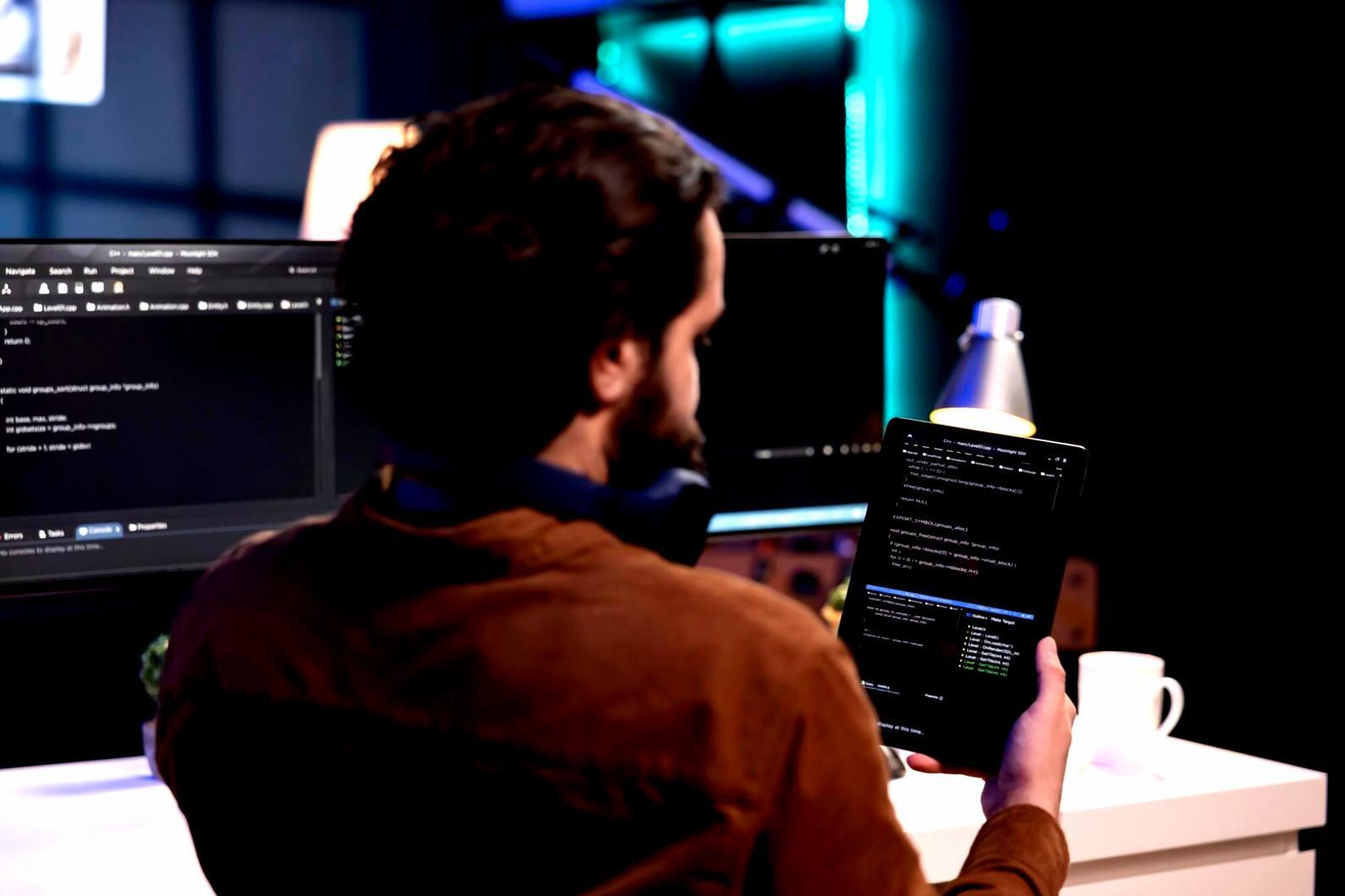
How the workshops are structured
Each programme runs as a sequence of short cycles rather than a single long arc. Participants receive a brief on Monday, build during the week, and present a working version by Friday — then get specific written feedback before the next brief arrives.
Reviewers point to concrete moments in your build: a grip mechanic that breaks on left-hand controllers, a corridor that reads as narrower than intended, a material that loses its cue in low-light environments. Feedback is tied to the actual file, not to general principles.
Every cycle ends with something testable — not a slide deck, not a mood board.
Participants keep access to session recordings and written briefs for six months after the programme ends, which makes it practical to revisit specific problems as they appear in later projects.
Which programme fits your situation
Programmes differ in entry requirements and the type of output they target. Use this overview to find the right starting point.
Foundation track
Spatial Interaction Design and Level Architecture run together as an entry sequence. No prior VR experience required — familiarity with any 3D software is enough to begin.
Transition track
Mechanics Prototyping and Visual Language in VR are aimed at developers who already ship games but haven't worked in stereoscopic 3D. Pace is faster, briefs are more open-ended.
Production track
Performance and Optimisation runs alongside any other programme as a companion module. Suited to participants building a specific project who need to hit frame-rate targets on a defined device.
Collaboration track
Multiplayer VR Systems is structured for pairs or small groups. Teams bring a shared project and work through network and social design decisions together across the eight-week arc.
Questions about enrolment or programme fit?
Reach out directly — describe your background and what you're working on, and we'll suggest a concrete starting point rather than a generic answer.